

As an Automotive Engineering and Tire Dynamics Specialist, this guide addresses common failure modes in vehicular tires, emphasizing that tire integrity is paramount to vehicle safety, performance, and fuel economy. The tire’s contact patch—the small area connecting the vehicle to the road—is the single most critical safety component. Proactive maintenance is essential, as the causes of premature wear and failure are often systemic rather than isolated incidents.
Essential Preventive Maintenance Protocols
Systematic maintenance significantly reduces the likelihood of critical tire failures. All drivers should integrate these fundamental checks into their routine:
- Conduct a Visual Sidewall and Tread Inspection weekly.
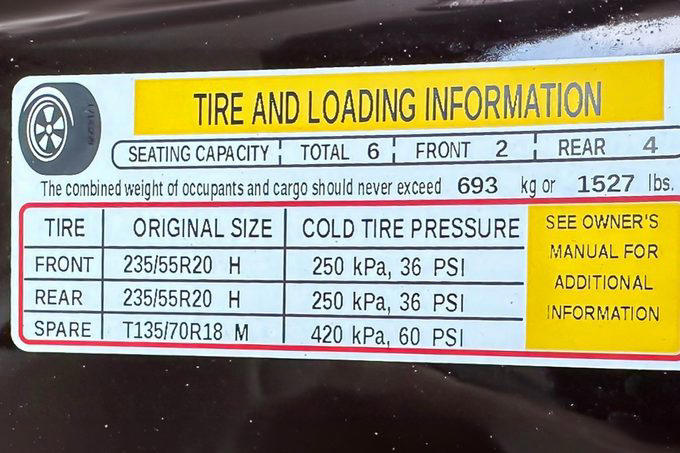
- Verify and adjust Tire Inflation Pressure monthly (using the vehicle manufacturer's placard specifications, not the maximum pressure listed on the tire sidewall).
- Perform Tire Rotation and Wheel Balancing every 5,000 to 8,000 miles to ensure uniform tread wear.
- Schedule a Suspension Alignment Check annually, or immediately following any significant impact (e.g., severe pothole or curb strike).
ENGINEERING NOTE: Driving with insufficient inflation pressure generates excessive heat within the tire’s structure due to increased sidewall flex. This thermal stress rapidly degrades rubber compounds and internal components, leading to potential structural failure and catastrophic blowout.
I. Loss of Inflation Pressure (Slow or Rapid Leak)
While tires naturally permeate air over time, accelerated pressure loss indicates a specific failure point that must be addressed immediately to prevent structural damage from underinflation.
Potential Failure Points
- Tread Penetration (Punctures by road debris).
- Rim/Wheel Porosity or Corrosion.
- Valve Stem or Valve Core Malfunction/Leakage.
- Damaged or Torn Tire Bead (the area sealing the tire to the wheel).
Prevention Strategy
- Maintain specified air pressure; this reduces the likelihood of minor debris causing full penetration.
- Ensure all valve stem caps are securely in place to protect the valve core seals from road debris, moisture, and chemical corrosion.
Repair Procedure
- For punctures less than 1/4 inch confined to the main tread area (excluding the shoulder and sidewall), the industry-recommended repair method is a combination plug patch, which requires dismounting the tire from the wheel. Structural repairs should not be attempted on high-performance or run-flat tires.
- Porous wheel surfaces may be sealed using an industrial-grade epoxy or sealant, provided the porosity is not due to structural cracking.
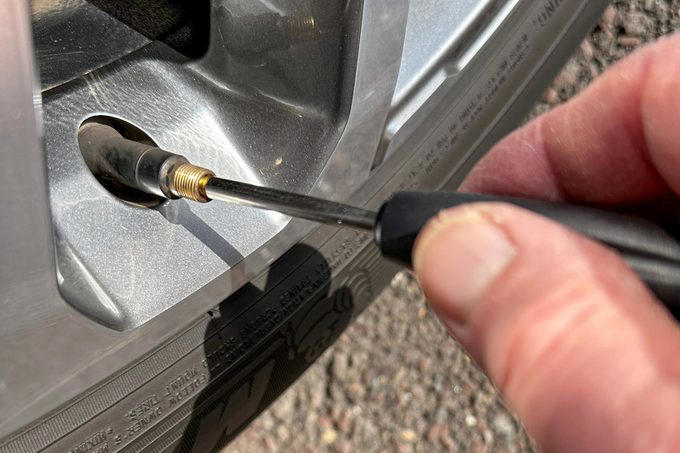
- A malfunctioning valve stem requires replacement. Replacement of the core only requires a valve core tool and subsequent re-inflation with an air compressor. Use a calibrated valve stem torque wrench to avoid damaging the TPMS sensor stem during re-coreing.
II. Rubber Compound Degradation (Dry Rotting/Weather Checking)
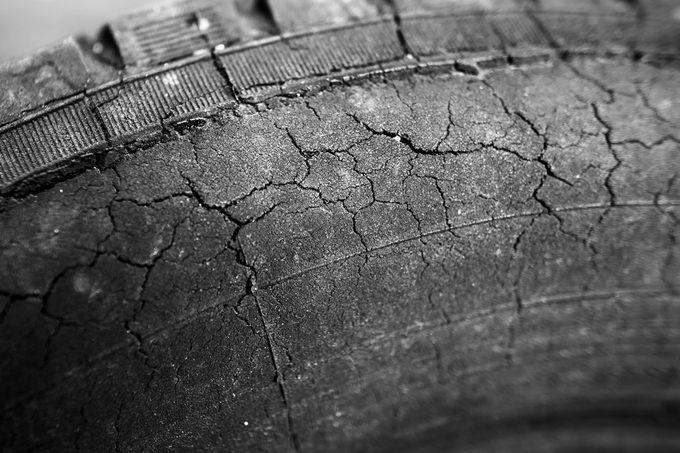
This condition, characterized by surface cracking, results from the breakdown of the tire's rubber compound due to environmental factors.
Causative Factors
Dehydration, extended periods of stationary storage, intense ultraviolet (UV) radiation exposure, extreme thermal cycles (heat/cold), and exposure to caustic cleaning agents or road chemicals.
Visual Identification
Look for surface cracking and splitting, typically beginning on the sidewall but also appearing in the tread grooves. Severe dry rot can lead to tread separation—a catastrophic failure.
Prevention Strategy
- Regular Operation: Driving the vehicle flexes the tires, helping to distribute protective chemical compounds embedded in the rubber. Stationary vehicles should be moved regularly.
- Cleaning and Protection: Clean tires with mild soap and water; avoid harsh, petroleum-based cleaners. Apply a high-quality UV protectant.
- Storage: When storing a vehicle long-term, cover the tires and keep them in a cool, dark, dry environment.
Repair Procedure
- Dry rot is a non-repairable condition. It signifies a loss of structural integrity. Tires exhibiting cracks deep enough to expose the internal ply or cord structure must be immediately replaced as they are dangerous and legally non-compliant with safety inspection standards.
III. High Steering Effort (Difficult Turning)
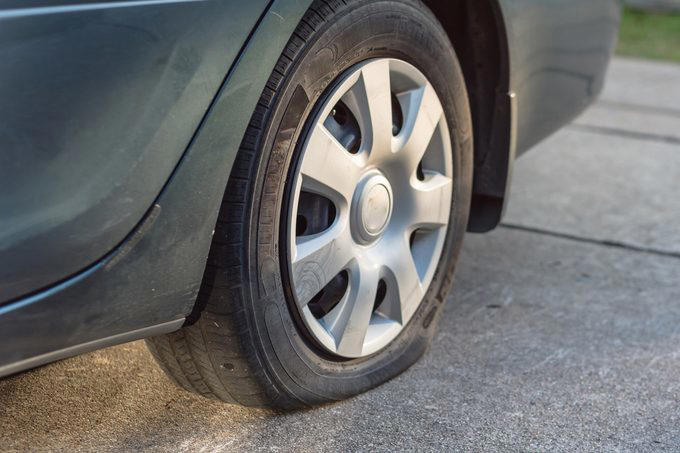
While often attributed to power steering (PS) system failures (low fluid, failing pump, loose serpentine belt), the most common tire-related cause of difficult steering and reduced steering wheel returnability is significant tire underinflation.
Causative Factors
Underinflated tires dramatically increase rolling resistance, requiring more physical effort to initiate and maintain a turn, similar to driving on flat surfaces.
Prevention and Correction
- Inflation Check: Immediately check and adjust all tire pressures to the manufacturer’s specification.
- System Check: Verify power steering fluid levels and the tension/condition of the serpentine belt (if applicable to the PS pump).
- Suspension Inspection: Check for worn or damaged suspension components (e.g., ball joints, tie-rod ends) which can also impede smooth steering.
IV. Accelerated Tread Degradation (Premature Baldness)
Tires wearing out faster than their specified lifespan is frequently due to systemic operational issues, primarily related to pressure and load.
Primary Causes
- Incorrect Inflation: Both over- and under-inflation drastically reduce the size and shape of the tire's contact patch, concentrating wear into a smaller area.
- Vehicle Overloading: Exceeding the tire's maximum load index (found on the sidewall) generates excessive heat and accelerates structural fatigue.
- Driving Dynamics: Aggressive driving, characterized by rapid acceleration, harsh braking, and high-speed cornering, significantly increases abrasive wear.
- Suspension Deterioration: Worn shock absorbers, struts, or bearings allow excessive wheel movement, which scuffs the tread off rapidly.
Correction and Mitigation
- Adhere strictly to vehicle-specific inflation and load limits.
- Inspect suspension and steering components (shocks/struts, wheel bearings, tie-rod ends) during routine maintenance.
- Adopt controlled driving habits, minimizing sudden load transfers.
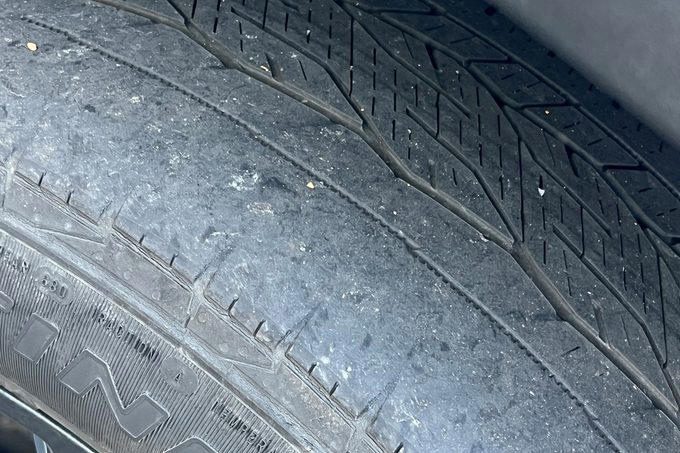
V. Non-Uniform Wear Patterns (Unevenly Wearing)
Uneven wear is a critical safety issue as it severely reduces the effective size of the contact patch, negatively impacting traction and braking distance.
Visual Diagnosis
- Center Wear: The central tread area wears fastest. Diagnosis: Chronic Overinflation.
- Inner or Outer Edge Wear: Wear is concentrated heavily on one side of the tread. Diagnosis: Alignment Geometry Error (specifically Toe-in/Toe-out or Camber angles being out of specification).
Correction and Prevention
- Maintain precise inflation pressure.
- Rotational Maintenance: Rotate and balance tires every 5,000–8,000 miles to distribute wear evenly.
- Alignment Correction: Worn components must be replaced, followed by a full four-wheel suspension alignment to return all angles (Camber, Caster, Toe) to manufacturer specifications.
VI. Irregular Tread Wear Patterns
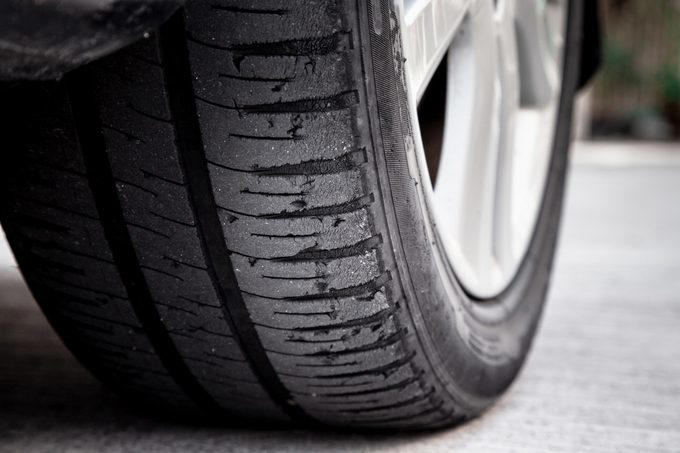
Distinct from generalized uneven wear, irregular patterns indicate localized, dynamic suspension or rotational issues.
Visual Diagnosis
- Cupping or Scalloping: Worn sections appear intermittently around the tire’s circumference. Diagnosis: Poor Wheel Balance or Worn Dampers (shock absorbers/struts) allowing the wheel to oscillate uncontrollably.
- Feather-Edge: The tread blocks have an angled, sharp edge on one side and a smooth edge on the other. Diagnosis: Excessive Toe Alignment Error.
- Flat Spots: Isolated patches of extreme wear in the center of the tread. Diagnosis: Wheel Lock-up due to aggressive braking or malfunction in the Anti-lock Braking System (ABS).
Correction and Prevention
- Immediately correct the wheel balance.
- Replace worn suspension components, specifically shock absorbers, which are critical for damping vertical wheel movement.
- Inspect the braking system; check wheel speed sensors and hydraulic components to prevent unwanted wheel lock-up.
- Replace tires if noise or vibration persists due to severe feathering or flat spots.
VII. Interactive FAQ: Tire Dynamics and Maintenance
What is the primary danger of driving on underinflated tires?
The primary danger is structural thermal failure (blowout). Underinflation increases the tire's rolling resistance, generating excessive flexing and friction. This dramatically raises the operating temperature, accelerating the breakdown of the internal rubber and belt materials, which can lead to rapid, catastrophic failure.
Why is a tire repair patch required to be placed from the inside?
Repairing a puncture with an internal patch (combination plug patch) is mandatory because it is the only way to inspect the tire's internal structure for hidden damage (e.g., sidewall separation) that may have occurred when the tire was driven while flat. An internal patch also provides a proper, permanent seal against the inner liner, maintaining the tire's pressure retention integrity.
How does alignment differ from balancing, and why are both necessary?
Balancing corrects weight imbalances in the wheel/tire assembly, preventing high-speed vibrations and irregular wear (like cupping). Alignment adjusts the vehicle's suspension geometry (camber, caster, and toe) to ensure the tires contact the road at the correct angle. Balancing is crucial for smooth rotation, while alignment is crucial for correct steering and minimizing directional wear (like feathering).
Posting Komentar untuk "A Technical Guide: Resolving and Preventing 6 Critical Tire Failure Modes"